
Threadline
Making an invisible relationship easier to see.
01 / THE IDEA
Who can access what?
As a company adds people and software, access can become difficult to see as a whole. Threadline is a conceptual access-intelligence brand built around a simple question: can you trace the connection from a person to an app to a permission?
The identity needed to make that abstract relationship understandable without leaning on the familiar padlocks, shields, and alarm-heavy language of cybersecurity.
02 / THE IDENTITY
Follow the thread.
The mark is a continuous line that folds and ends at a lime point. That gesture becomes the wider graphic device: a route through information, with a single marker drawing attention to what matters.
A near-black wordmark and generous neutral space keep the system composed. Lime is used as a signal rather than a background decoration, so a connection or action has room to stand out.


03 / PRODUCT SURFACES
Clarity carried into the interface.
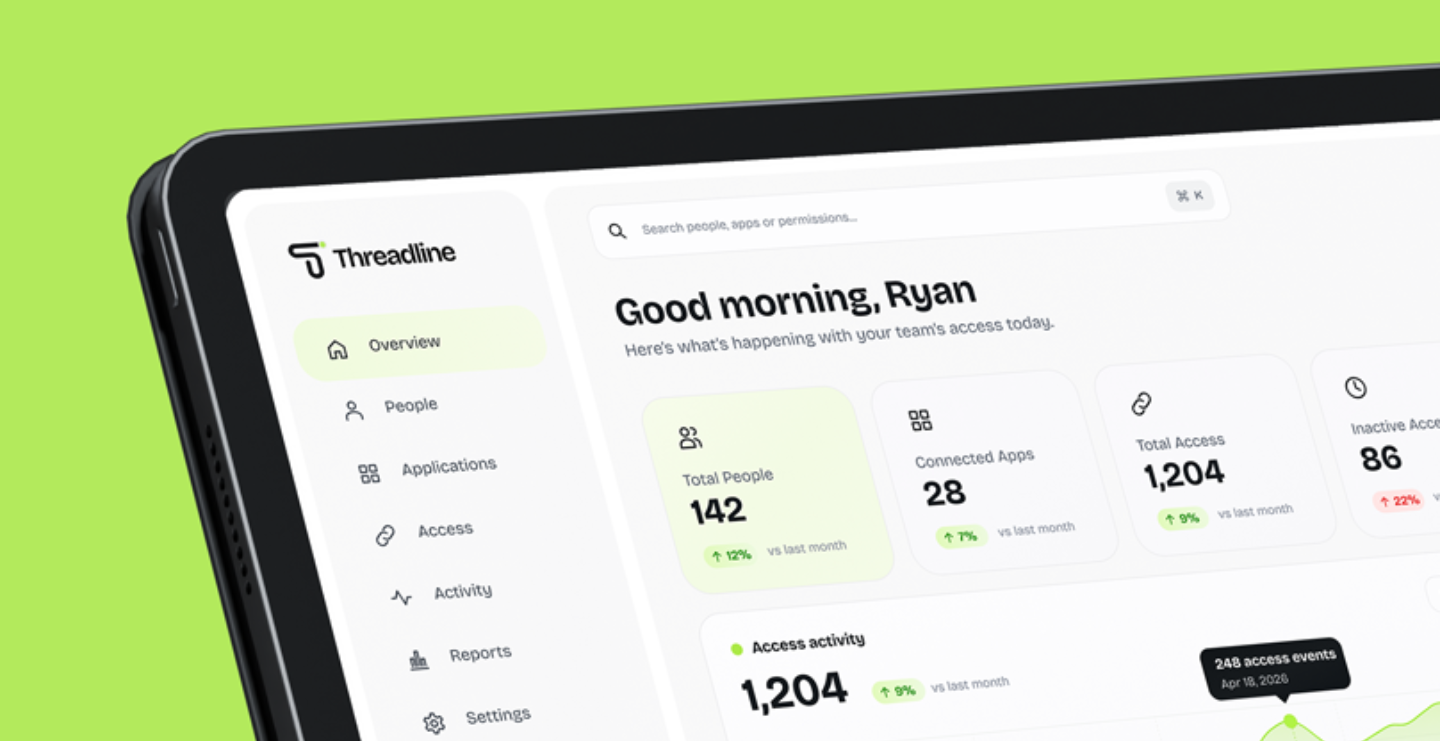
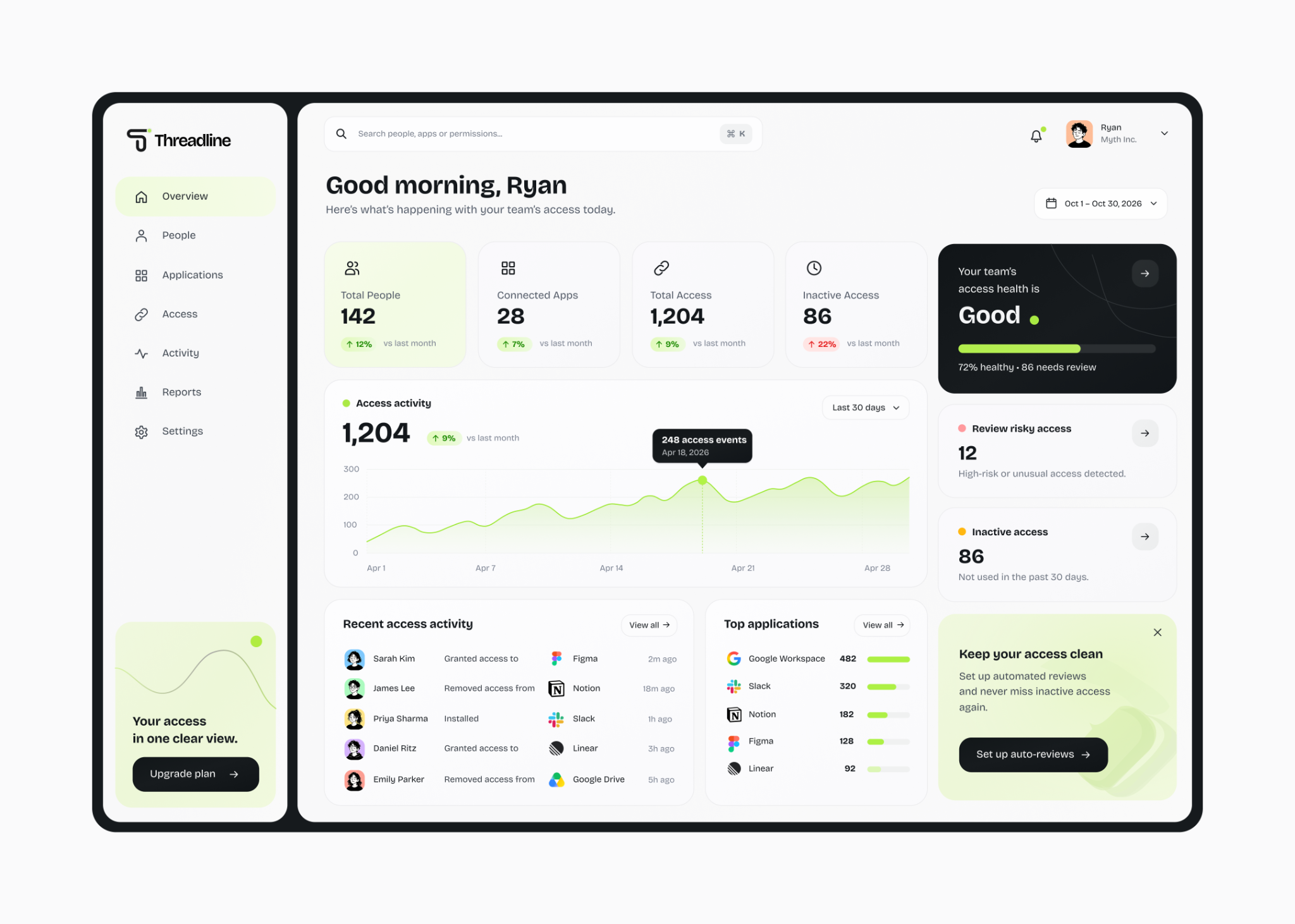
The application studies show how that visual language can extend into an access overview: people, connected apps, recent activity, and permissions are separated into readable groups.
Status treatments and direct prompts favor a next step over a vague alert. These screens are visual concepts with illustrative names and metrics, not a working or tested product.
04 / APPLICATIONS
One idea across different formats.
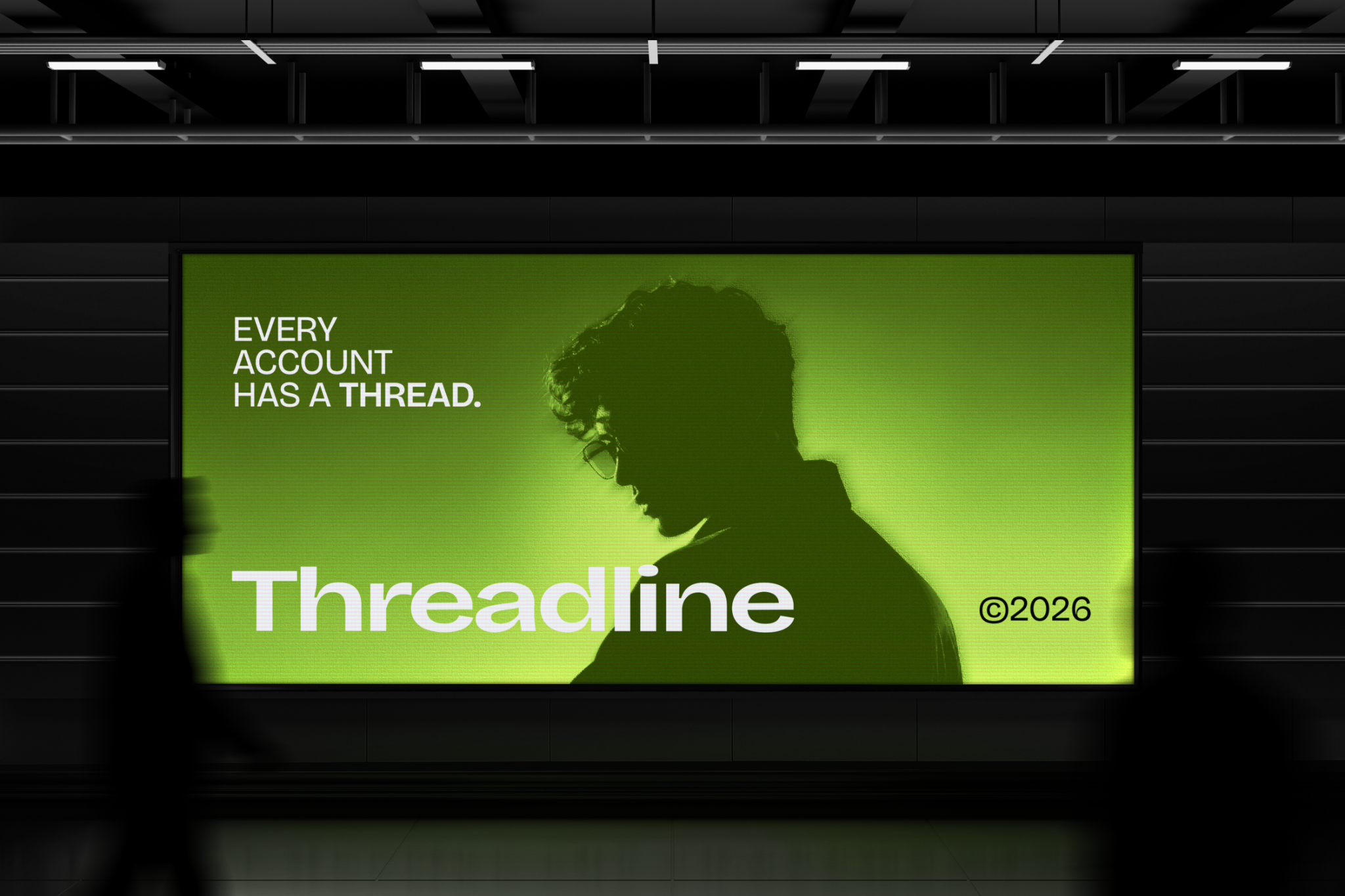
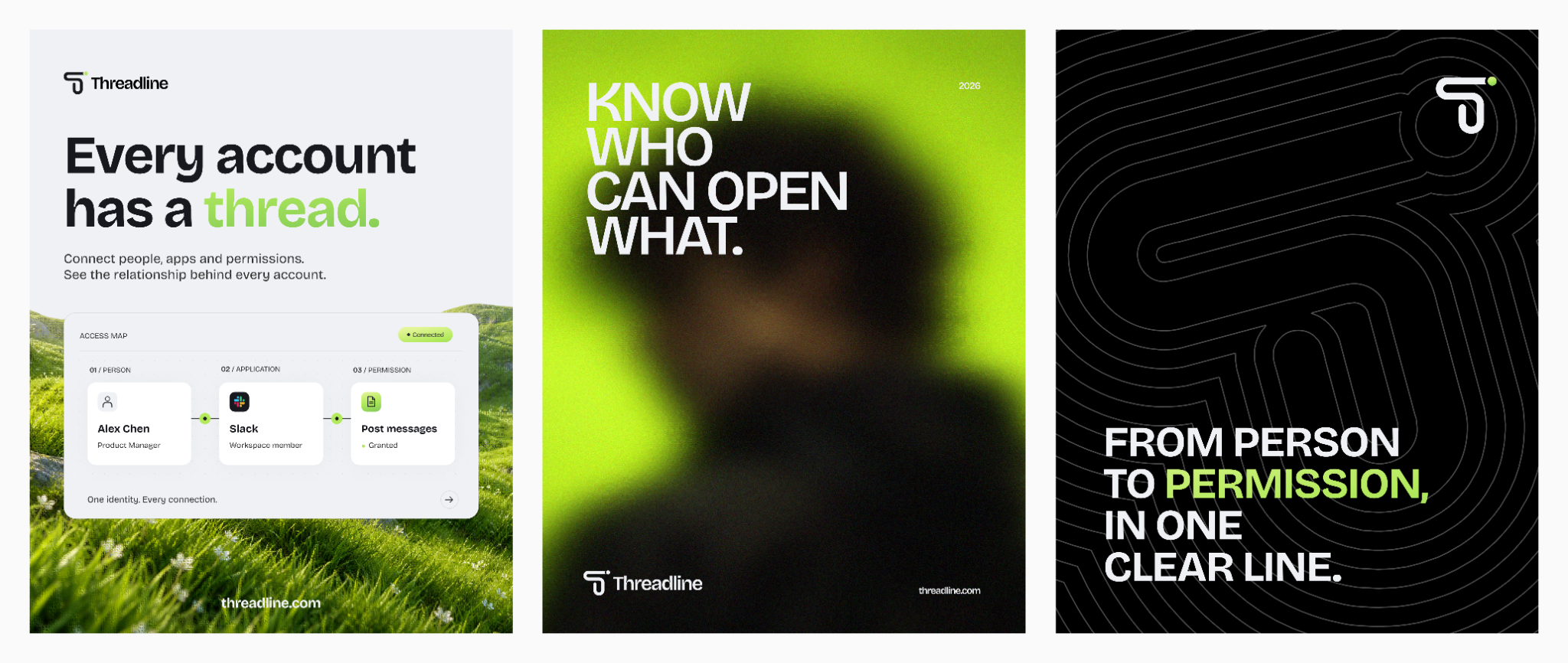
The billboard uses a concise brand line at large scale. The three social compositions shift between a plain-language promise, a person-to-permission example, and the thread motif while retaining the same typographic voice.
Together the applications show a system that can speak clearly in a split-second glance and still support denser product information.
05 / REFLECTION
A concept designed for clarity.
Threadline is a self-directed portfolio project. The images demonstrate an identity system and illustrative applications; they do not represent a launched company, live interface, or measured outcome.
The next useful step would be to test whether someone unfamiliar with access governance can understand the product promise and recognize the priority markers across these formats.